


 813-435-6876
Back and Herniated Disc Pain After a Car Accident
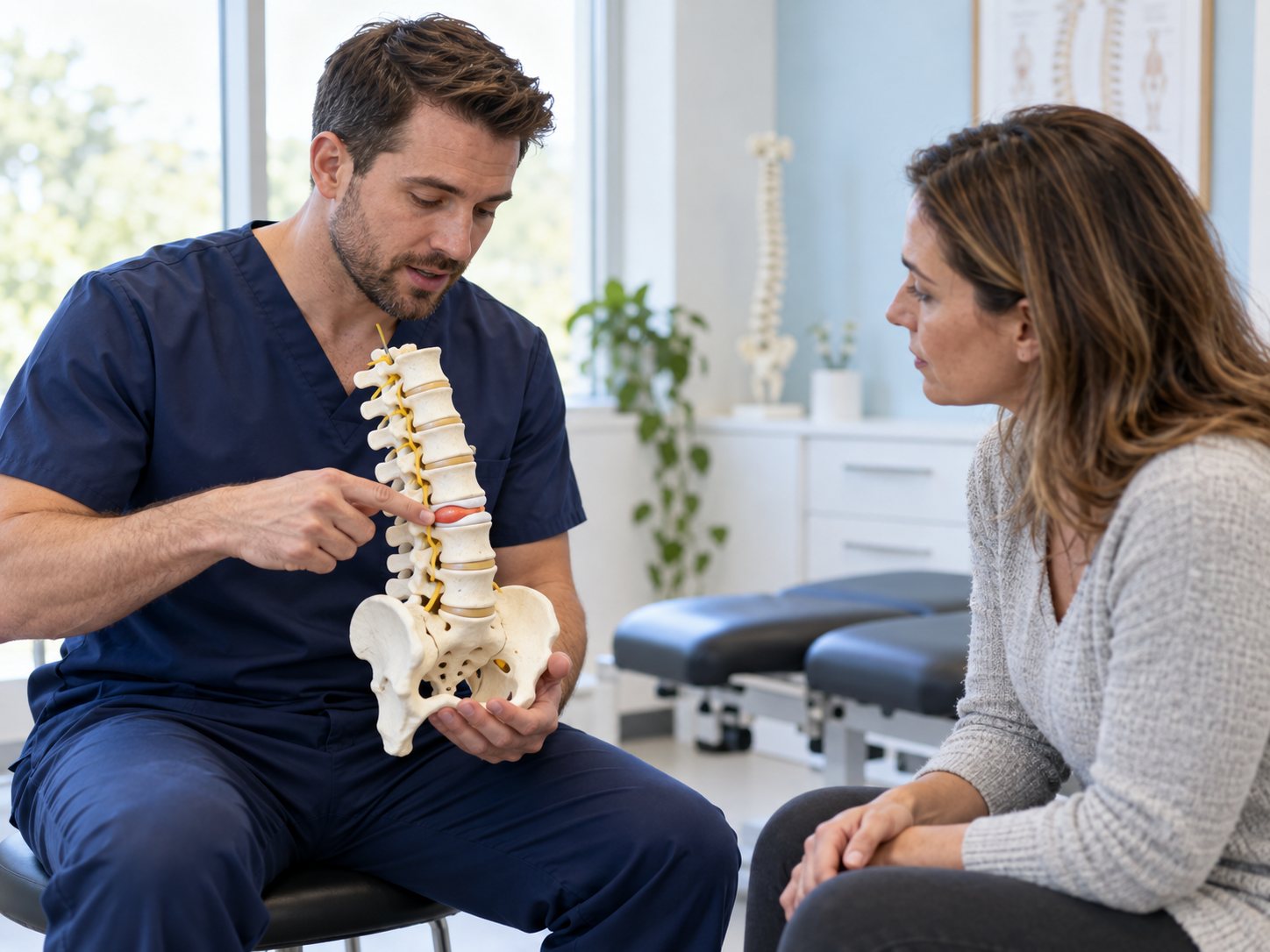
You felt fine at the scene. Maybe a little sore. Then a day or two later, getting out of bed means a sharp pull in your lower back, or a burning pain runs down your leg. If that sounds familiar, you are not alone, and you are not imagining it.
Back pain after a car accident is one of the most common car accident injuries, and in some cases the cause is a herniated disc. This guide explains how collisions injure the spine, which symptoms point to a disc problem, when to go straight to the ER, and how injury care works for patients in Lakeland, FL.
Quick answer: if back pain, leg pain, numbness or weakness starts after a crash, get evaluated within days, not weeks. Go to the ER right away for loss of bladder or bowel control, numbness in the groin or inner thighs, or rapidly worsening weakness.
Why a Car Accident Can Hurt Your Back
In a collision, your seat belt holds your torso while your spine absorbs sudden force. Your back may be thrown forward, backward and sideways in a split second, often with a twist. The discs between your vertebrae act as shock absorbers, and they are not built for that kind of load.
This can happen at lower speeds too. A fender bender on Memorial Boulevard or a rear-end collision at a stoplight on US-98 can still strain muscles, irritate joints and injure discs, even when the vehicle damage looks minor.
Common Car Accident Back Injuries
- Muscle and ligament strains: the most common injury, often causing stiffness and spasms
- Facet joint irritation: pain with twisting or leaning back
- Sacroiliac joint injury: pain low on one side of the back or in the buttock
- Bulging or herniated discs: pain that may travel into the leg, sometimes with numbness or tingling
- Fractures: less common, but they need emergency care
Because these injuries can feel alike at first, a hands-on exam matters more than guessing.
What Is a Herniated Disc?
Each spinal disc has a soft, jelly-like center surrounded by a tougher outer layer. A herniated disc happens when part of that soft center pushes out through a tear in the outer layer. If it presses on a nearby nerve, it can cause pain, numbness or weakness. You may hear it called a slipped or ruptured disc, and it is most common in the lower back. For a clear medical overview, see Mayo Clinic’s guide to herniated disks.
Can a Car Accident Cause a Herniated Disc?
A collision can injure a disc or aggravate one that was already worn. Disc problems often build over time with age and wear, and the sudden force of a crash can be the moment a weakened disc tears or bulges. Some people also have disc changes that never caused pain until the accident. Your provider looks at your history, exam findings and, when needed, imaging to understand what is new and what is not.
Herniated Disc Symptoms After a Car Accident
Symptoms depend on where the disc is and whether it presses on a nerve. Watch for:
- Low back pain that is sharp, deep or hard to shake
- Pain that travels into the buttock, thigh, calf or foot, often on one side (commonly called sciatica)
- Numbness or tingling in the leg or foot
- Muscle weakness, such as a foot that drags or a leg that feels unsteady
- Pain that gets worse when you cough, sneeze, sit for long periods or bend forward
A herniated disc in the neck usually causes the most pain in the shoulder and arm rather than the back. Symptoms can show up hours or days after the crash, so waiting for pain before getting checked can cost you valuable time.
Red Flags: When to Go to the ER
A rare but serious condition can occur when a disc presses on the bundle of nerves at the base of the spine. Go to the emergency room or call 911 if you have:
- Trouble controlling your bladder or bowels, or trouble urinating
- Numbness in the groin, inner thighs or around the rectum
- Pain, numbness or weakness that is rapidly getting worse
Do not wait for an appointment if any of these appear.
How a Herniated Disc Is Diagnosed
A proper evaluation starts with your story: how the crash happened, when symptoms began, and what makes them better or worse. Then comes a physical and neurological exam to check your movement, reflexes, strength and sensation. X-rays can rule out fractures but do not show discs. When your symptoms or exam call for it, an MRI can show whether a disc is involved, and your provider can refer you for imaging.
Injury Care for Back Pain and Disc Injuries in Lakeland
The good news is that many disc injuries respond to conservative care, and surgery is not needed for most people. At Iron Spine Medical, your plan is built around your exam and may include:
- Chiropractic adjustments to improve joint motion and ease pain, with technique chosen to fit your condition
- Spinal decompression therapy to gently reduce pressure on irritated discs and nerves
- Physical therapy in Lakeland to build core strength, flexibility and safe movement habits
- Activity guidance on lifting, sitting and returning to work or exercise
Curious how rehab fits in? Read our guide on whether a herniated disc can be fixed with physical therapy. If your exam suggests you need care outside our scope, such as advanced imaging or a specialist, we will refer you.
What to Do If You Suspect a Disc Injury After a Crash
- Get checked early. Florida’s PIP rules require initial care within 14 days of the accident, and our guide on what to do after a car accident in Lakeland explains how that works.
- Describe all symptoms. Mention every ache, tingle or weak spot, even if it seems minor.
- Track your pain. Note when it started, how it changes through the day, and what it keeps you from doing.
- Stay consistent with care. Gaps in treatment can slow recovery and raise questions later.
- Avoid heavy lifting and long stretches of sitting until your provider clears you.
Protecting Your Health and Your Personal Injury Claim
Clear medical records matter if your accident turns into a personal injury claim. Because disc changes can appear in people who have no pain, it helps to have a documented timeline showing when your symptoms began, how they were evaluated, and how you responded to care. Consistent visits, honest reporting and complete records give the most accurate picture of your injury.
If you are dealing with disputed fault or insurance pushback, consider speaking with a Florida personal injury attorney. Iron Spine Medical provides evaluation, treatment and medical documentation, and does not provide legal advice.
Back Pain After a Lakeland Car Accident? Get Evaluated
Do not tough it out. Early auto injury care can help you understand what is going on and start recovery sooner. Iron Spine Medical helps Lakeland patients with back pain after car accidents, herniated discs, sciatica, whiplash and other personal injury concerns. Learn more about our auto injury care in Lakeland, FL.
Ready to get started? Contact Iron Spine Medical or call 813-435-6876.
Iron Spine Medical
1847 N Crystal Lake Drive, Lakeland, FL 33801
Monday, Tuesday and Thursday: 9 AM to 12 PM and 3 PM to 6 PM
Wednesday: 9 AM to 12 PM

Frequently Asked Questions
Can a car accident cause a herniated disc?


Yes. The sudden force of a collision can injure a disc or aggravate one that was already worn. An exam, your history and sometimes imaging help determine what is new since the accident.
How do I know if back pain after a car accident is a herniated disc?
Pain that travels into the buttock or leg, numbness, tingling, weakness, or pain that worsens with coughing, sneezing or sitting can point to a disc problem. Only an evaluation can confirm it, so get checked rather than guessing.
How long after a car accident can herniated disc symptoms appear?
Symptoms may start within hours, but it is common for them to build over several days as inflammation and muscle tension develop. Pain that shows up late still deserves an evaluation.
Can a herniated disc heal without surgery?
For most people, yes. Many herniated discs improve with conservative care such as guided activity, rehabilitation and other non-surgical treatment, and symptoms often ease over time. Recovery varies, and urgent symptoms need emergency care.
Should I see a chiropractor or a physical therapist for a herniated disc after a car accident?
The right choice depends on your exam. Many patients benefit from a combination of chiropractic care, spinal decompression and physical therapy. A thorough evaluation helps decide what fits your injury, and you will be referred out if you need other care.
Is chiropractic care safe with a herniated disc?
With a proper evaluation first, the technique can be matched to your condition. Care is not appropriate if you have red-flag symptoms such as loss of bladder or bowel control or rapidly worsening weakness, which need emergency attention.
Will PIP cover care for a herniated disc after a car accident?
Florida PIP can cover reasonable, medically necessary care when initial services are received within 14 days of the accident, subject to policy limits and the rules of your coverage. Confirm the details with your insurance company.
Do I need an MRI after a car accident?
Not always. Your provider decides based on your symptoms and exam. An MRI is most helpful when there is leg pain, numbness, weakness, or symptoms that are not improving as expected.
This article is for general education and is not medical or legal advice. Insurance rules and benefits vary, so confirm details with your insurer or a licensed Florida attorney. If you have severe symptoms, call 911 or go to the nearest emergency room.


 813-435-6876